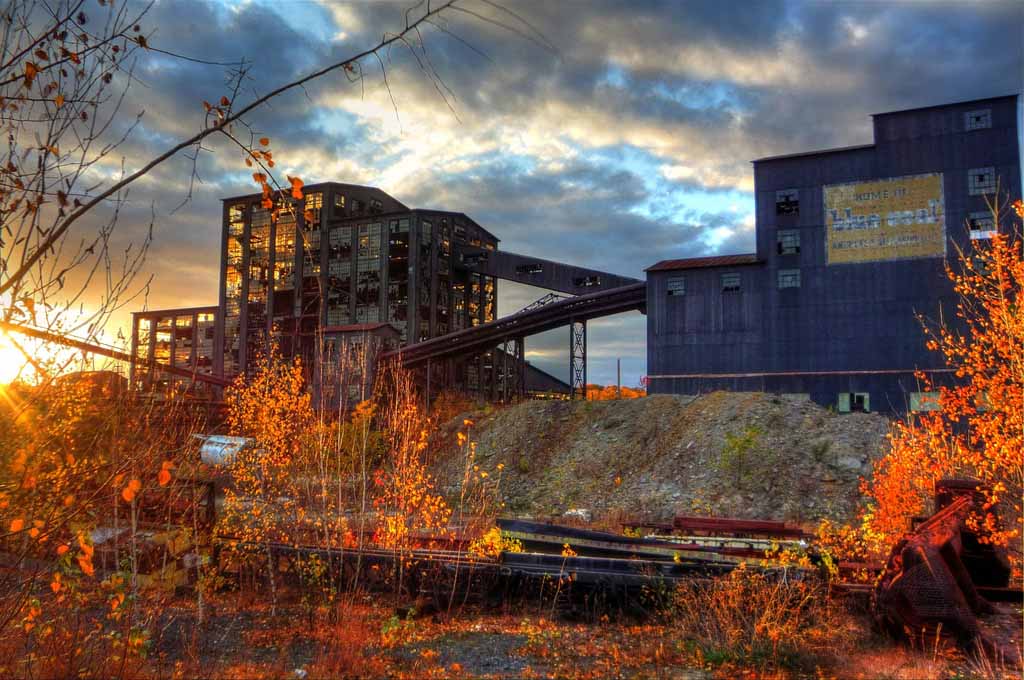
“The Final Years of the Wyoming Valley’s Anthracite Industry”

Title: “The Final Years of the Wyoming Valley’s Anthracite Industry”
Description: The Huber Breaker Preservation Society will sponsor a panel discussion on this topic, Tuesday, January 24, 2011, 6:30 p.m., at the Earth Conservancy Building, Main Street, Ashley (in front of the Huber Breaker).

The panelists will include:

•Tom Supey, Jr., who mined coal with his father’s company into the early 1970s on the West Side; he is now superintendent of the Lackawanna Coal Mine Tour in Scranton.
•Bill Hastie, a retired mineworker who worked for the Knox Coal Company until 1959.
•Phil Voystock, a retired mineworker who worked for seven different collieries into the late 1950s, including the Huber, Sugar Notch, and Jeddoh-Highlands.
•Bob Wolensky, King’s College professor, who has written about the area’s mining history.

The public is invited free of charge, and will be invited to participate in the discussion. Refreshments will be served. For information contact Bill Best, President, Huber Breaker Preservation Society at bluecoalnews@yahoo.com.
Start Time: 18:30
Date: 2012-01-24

Posted in Uncategorized | Comments Off

HBPS 2nd Annual Chicken BBQ

Title: HBPS 2nd Annual Chicken BBQ
Location: Ashley Fireman Park Hall
Description: Dinner includes:
1/2 Chicken, Baked Potato, Coleslaw, & Cake
$8.00
TAKE OUT ONLY
Benefitting the Huber Breaker Miner’s Memorial Park
Start Time: 11:30
Date: 2011-08-14
End Time: 16:00

Posted in Uncategorized | Comments Off

“The Final Years of the Wyoming Valley’s Anthracite Industry”

The Huber Breaker Preservation Society will sponsor a panel discussion on this topic, Tuesday, June 7, 2011, 6:30 p.m., at the Earth Conservancy Building, Main Street, Ashley (in front of the Huber Breaker).

The panelists will include:

•Tom Supey, Jr., who mined coal with his father’s company into the early 1970s on the West Side; he is now superintendent of the Lackawanna Coal Mine Tour in Scranton.
•Bill Hastie, a retired mineworker who worked for the Knox Coal Company until 1959.
•Phil Voystock, a retired mineworker who worked for seven different collieries into the late 1950s, including the Huber, Sugar Notch, and Jeddoh-Highlands.
•Bob Wolensky, King’s College professor, who has written about the area’s mining history.

The public is invited free of charge, and will be invited to participate in the discussion. Refreshments will be served. For information contact Bill Best, President, Huber Breaker Preservation Society at bluecoalnews@yahoo.com.

Posted in Uncategorized | Comments Off

Healthy Communities Challenge Awardees Announced

For Immediate Release: March 22, 2011
Contact: Carol Hussa, Co-Chair -Live Well Luzerne County Coalition
YMCA Action Communities for Health, Innovation & Environmental Change
Phone: 823-2191 X 140

Luzerne County: The Live Well Luzerne County Coalition is proud to announce the 2011 awardees of its Healthy Community Challenge; an initiative focused on improving health and quality of life at the community level using proven programs and strategies to create lasting changes that improve peoples’ ability to live active, healthy lives. Awardees receive training, a mentor, and funding to assist community groups, organizations and municipalities to work together to accomplish permanent changes in four areas: healthy parks and public places; healthy streets and roadways; healthy community planning and zoning; and healthy eating. “We are excited about the creativity these projects show and the level of community involvement that they have inspired” reports Carol Hussa, a member of Live Well Luzerne, the County-wide health promotion coalition that coordinated the challenge.

The nine projects include :
1.) Huber Breaker Preservation Society, in partnership with the Eastern PA Coalition for Abandoned Mine Reclamation, the Delaware & Lehigh National Heritage Corridor, Earth Conservancy, and the Anthracite Heritage Alliance OSM/VISTA Appalachian Coal Country Team working with Ashley Borough to improve public access and awareness of the planned three acre Anthracite Region Miner’s Memorial Park along South Main Street, Ashley, fronting the colossal historic Huber Breaker Colliery grounds; $1500 was awarded.

Robert E. Hughes, local environmental leader with the Eastern PA Coalition for Abandoned Mine Reclamation (EPCAMR) and community volunteer was specifically requested to mentor the Huber Breaker Preservation Society’s Project because of his extensive knowledge of local anthracite mining history, building community connections, previous work with the Society, and his networking ability that might serve the Preservation Society well when considering other grant funds to support the project. Mr. Hughes, assisted Mr. Ray Clarke, Chairman of the Board for the HBPS, with the successful preparation, local partnership coordination, grant writing, and budget development for the design of the Anthracite Region Coal Miner’s Memorial Park Project in Ashley, PA.

The Huber Breaker Preservation Society will use several strategies to improve the connectivity of steets and unimproved pathways that lead to the historic Huber Breaker and Anthracite Region Coal Miner’s Memorial along South Main Street, Ashley Borough. Improvements in the neighborhood pathways will allow greater access to the property and the Huber Breaker and Anthracite Region Coal Miner’s Memorial for historical interpretation, photography, artisans, educational programs, and outdoor walking recreation within the 3 acres of greenspace owned by the HBPS. Currently there are limitations on the access to the property and no safe routes to connect local residents and visitors to the proposed park area. Trail and interpretive signage following the design specifications of the Delaware & Lehigh National Heritage Corridor’s, (D & LHC), Visually Speaking guidelines would be the most appropriate use for this historical location that ties into other important places of local interest such as the Wyoming Valley Levee Raising Project and the Luzerne County Courthouse, which also uses the D & L HC design specifications. Improved signage will inform potential outdoor users and recreationists of not only the trail presence, but the actual HBPS property and the Anthracite Region Coal Miner’s Memorial.

Ashley Borough municipality will be the decision making body on final determination of signage placement, street connectivity, and types of improvements that can be made on pathways leading the South Main Street property. PennDOT will have the final determination of placement of “Yield to Pedestrians” signage that the HBPS is prepared to apply for once it completes a survey of the local pedestrian and vehicle traffic along 101 South Main Street in Ashley, PA.

The current challenge is that there is no signage or improvements to the street connectivity and unimproved pathways that lead to the historic Huber Breaker Property. There are no crosswalks leading to the property, but there are two perpendicular streets, Cook and Wyoming, property that connect to South Main Street across from the proposed park.

Traffic along South Main Street is a State Route and is maintained by Ashley Borough, however there is a need for traffic calming in this location. There is a need for funding for the signage and the pathway improvements. The property is only 3 acres in size and was former abandoned mine lands that is now being turned into a wonderful greenspace for the Huber Breaker Coal Region Anthracite Miner’s Memorial and historical interpretive pleasure of the viewing public. The sidewalks that parallel the HBPS property along 101 S. Main Street are also in deplorable conditions.

The HBPS will work with Dale Freudenberger-Anthracite Region Coordinator from the D & LHC- to design, create, and designate areas for placement of kiosks and signage on property and along the way to the park within the Borough limits of Ashley. The HBPS will recommend the placement to the Ashley Borough and PennDOT for signs that will be on Borough property or State property. The HBPS will work with EPCAMR as their mentor to review other Tools & Resources from the suggested websites from the workshop to try and secure additional funding for the project. The HBPS will work with its community volunteers, the D & LHC, Earth Conservancy, and the Anthracite Heritage Alliance Office of Surface Mining/AmeriCorps Volunteers in Service to America (VISTA) Watershed Community Development Coordinator, Wren Dugan, who has been assisting the Society in other fundraising efforts.

Ashley Borough will make the decision on the final determination where the placement of the signage, street connectivity, and types of improvements that will be allowed on unimproved pathways leading to the property along South Main Street, Ashley, PA. The HBPS will complete a survey of the local pedestrian and vehicle traffic along 101 South Main Street in Ashley, PA. The PA DOT will make the final determination of the placement of 2 “Yield to Pedestrians” signs. Slower traffic will ensue as a lasting change and awareness of the Huber site will increase. Recreationists, students, youth, the local resident population, and historical and outdoor folks will benefit the most from the increased visibility, access, interpretation, walking pathways, and signage.

There will be signage and improvements to the street connectivity and unimproved pathways that lead to the historic Huber Breaker Property. There will be 2 crosswalks leading to the property at Cook and Wyoming Streets. The HBPS will hope to slow traffic at 101 S. Main Street with the installation of these traffic calming devices and signs. Funding will be utilized for the signage and kiosk design, construction, and placement at the property and throughout the Ashley Borough limits. The 3 acres property will become a wonderful greenspace for the HuberBreaker Coal Region Anthracite Miner’s Memorial and historical interpretive pleasure of the viewing public. The HBPS will continue to look for additional funding to improve and replace the old concrete sidewalks that parallel the HBPS property along 101 S. Main Street that are in deplorable conditions.

2.) Exeter Township working with local business to establish a park, playground and trail adjacent to their local state boat launch;

3.) Center for Landscape Design and Stewardship working with the Greater Hazleton Civic Partnership and Hazleton Health and Wellness Center to establish a weekly summer farmers market in downtown Hazleton;

4.) Luzerne County Flood Protection Authority working with the City of Wilkes-Barre to enforce and promote the city’s tobacco ban in its public parks;

5.) Anthracite Scenic Trails Association working with Kingston Township, Luzerne Borough, Penn DOT and the Back Mountain Trail Council to improve public access to the trail;

6.) City of Nanticoke working with Luzerne County Community College and the Boy Scouts to create a walking trail in an existing town park;

7.) Wilkes-Barre City working with Heights Murray Elementary School to conduct an engineering cost analysis in preparation for a Safe Routes to School grant;

8.) Fairview Township Recreation Board working with multiple community organizations, businesses and volunteers to increase bicycle use and safety in and around Fairview Memorial Park; and

9.) Greater Hazleton Civic Partnership working with Greater Hazleton Health Alliance to encourage increased use of the Hazleton Rail Trail by families with young children.

Awardees attended a specially designed conference in November 2010 where they learned about proven change strategies, programs and resources from national, state and local healthy community experts who challenged them to plan and implement permanent changes that enhance health and quality of life by improving access to regular physical activity, healthy eating or tobacco use reduction in their own communities.

“Across the country, communities are taking action now to reverse the increase of overweight and obesity that is contributing to the alarming rate of chronic diseases such as diabetes and heart disease, adds to our soaring health care costs and threatens to shorten the lives of our children.” according to Hussa. The Pennsylvania Department of Health reports that more than 36% of Luzerne County students in grades K thru 6 are either overweight or obese setting them up for a lifetime of possible health problems. The rising rate of overweight and obesity has been attributed to an epidemic of physical inactivity and poor nutrition and tobacco use is higher here than in most of the nation. “We have engineered physical activity out of daily life; our community design makes us dependant on automobiles to get anywhere and our addiction to convenience is killing us” observes Hussa. The goal of the Challenge is to empower people to make changes and inspire decision makers and interested individuals to learn about what they can do in their own hometowns to improve their health, their neighbors’ and most importantly, the health of future generations.

“Everyone knows you should move more and eat better, but when there is no full service grocery store nearby or there is no safe, enjoyable place to walk, it is hard to follow that advice” says Michele Schasberger, Director of the Wyoming Valley Wellness Trails Partnership. “Communities have always been on the front lines of keeping their citizens safe and healthy; and this Challenge will give them additional tools to aid this mission” she stated emphatically.
The Healthy Community Challenge is supported by a grant from the Healthy Northeast PA Initiative in partnership with Live Well Luzerne and the Wilkes-Barre YMCA’s ACHIEVE initiative.

Photo Credit: The Live Well Luzerne Healthy Community Challenge Team includes: L-R Front Row: Arlene Sindaco, Wyoming Valley Vegetarians; Helene Flannery, Area Agency on Aging; Kathy Finsterbush, PA Department of Health; Carol Hussa; Wilkes-Barre YMCA ACHIEVE; Michele Schasberger, Live Well Luzerne; Valarie Bell, PA Department of Health; Rev. Ann Marie Acacio, Interfaith Council; Lillian Russell-Burnett, Penn State Cooperative Extension.
Second Row L-R: Paul Lumia, North Branch Land Trust; Paul Ginter, Wilkes-Barre City Health Department; Linda Tirpak, Blue Cross of Northeastern Pennsylvania; Diane Madras, Misericordia University; Howard Grossman, Jewish Family Services and Joe Aquilina, Hazleton Health & Wellness Center.

Posted in Uncategorized | Comments Off

Coal Mining History Week! January 22-29, 2011

Anthracite Living History Group Announces
Coal Mining History Week Activities

In conjunction with the 52nd anniversary of the Knox Mine Disaster on January 22, 2011, the Anthracite Living History Group announces the following mining-history related activities, which are open to the public free of charge

•Saturday, January 22, 4:30 p.m., annual Knox disaster memorial mass, at St. John’s Catholic Church, Williams St., Pittston.

•Saturday, January 22, 6 p.m., panel discussion on the Knox disaster featuring Audrey Calvey (daughter of Knox victim, John Baloga); Samuel de Alba (Chairman, Knox Disaster Monument Committee); William A. Hastie (former Knox Coal Company employee), and Joseph Panzitta (former anthracite coal operator), at St. John’s Catholic Church Parish Hall, Williams St., Pittston. Refreshments provided.

•Sunday, January 23, 11:15 p.m., memorial commemoration of the 12 Knox disaster victims, in front of the old St. Joseph’s Church (now Baloga Funeral Home), Port Griffith.

•Sunday, January 23, 11:45 p.m., gathering and commemoration at the Knox disaster break-in site along the Susquehanna River Trail, Port Griffith (one-half mile north of the 8th Street Bridge).

•Sunday, January 23, 2:30 p.m., Knox disaster history program, at the Anthracite Heritage Museum, McDade Park, Scranton, presentations by John Gadomski & George Mazur (the last two Knox disaster survivors); Samuel De Alba (Chairman, Knox Disaster Monument Committee); and Prof. Robert Wolensky (King’s College professor who has written about the Knox disaster). Refreshments provided.

•Tuesday, January 25, 6:30 p.m., presentation by William Hastie & Robert Wolensky on “The Pennsylvania Coal Company and the Subcontracting System: Italians, Wildcatters, and the Industrial Workers of the World, 1905-1916,” at the Earth Conservancy Building, Main Street, Ashley. Sponsored by the Huber Breaker Preservation Society. Refreshments provided.

•Saturday, January 29, 2:30 p.m., presentation by William Hastie & Robert Wolensky on “The Labor Wars of 1928: Rinaldo Cappellini, Alex Campbell, and Industrial Conflict at the Pennsylvania Coal Company,” at the West Pittston Presbyterian Church. Sponsored by the West Pittston Historical Society. Refreshments provided.

For further information: Eric Bella (570 855 2224) or Zach Petroski (570 574 3031), co-presidents, Anthracite Living History Group.

Posted in Uncategorized | Comments Off

HBPS Special Event Meeting

Title: HBPS Special Event Meeting
Location: 101 South Main St. Ashley, PA 18706
Description: Presentation by Bill Hastie and Bob Wolensky titled, “The Pennsylvania Coal Company and the Subcontracting System:  Italians, Wildcatters, and the Industrial Workers of the World, 1905-1916.”  The talk will take place at the Earth Conservancy Building, 101 South Main St., Ashley.  Beginning in 1938, the Pennsylvania Coal Company operated collieries in the Pittston-Avoca and Scranton-Dunmore areas.  The company had a long history of labor-management conflict and involvement with alleged organized criminals.  The speakers are currently completing a book on labor relations at the Pennsylvania Coal Company between 1900 and 1928. The general public is invited to attend.  Refreshments will be served.
Start Time: 7:00 p.m.
Date: 2011-01-25

Posted in Uncategorized | Comments Off

HBPS Christmas Party

Title: HBPS Christmas Party
Location: Earth Conservancy Building 101 South Main Street, Ashley, PA
Description: All past and current members are welcome. Bring a covered dish and celebrate the holidays.
Start Time: 6:00 PM
Date: 2010-12-06

Posted in Uncategorized | Comments Off

Huber Happenings Volume 3, Number 3, August 2004

THE NEWSLETTER OF THE HUBER BREAKER PRESERVATION SOCIETY

Volume 3, Number 3 August 2004

HBPS Hosts Roundtable Interviews with Miners

On July 20, 2004, Dr. Robert Wolensky led a roundtable discussion with workers formerly employed by the Huber Breaker and Colliery.  The event was held at the Earth Conservancy conference room, following a brief regular meeting of the society.  Dr. Anthony Mussari, chairman of the Board of Directors of HBPS, introduced the discussion.  Dr. Mussari, whose television documentaries, “Windsor Park Stories,” appear regularly on WVIA, taped portions of the program for inclusion in documentaries he plans to produce.  The roundtable program was publicized by a front-page story in the Times-Leader and drew a sizable audience, which included Debbie Higgins, mine-heritage reporter for the Citizens’ Voice.

Bob Wolensky, professor at the University of Wisconsin-Stevens Point and author of The Knox Mine Disaster and Fighting for the Union Label, has taped several such interviews with miners, as an oral history project supported in part by Wilkes University.

Why memorialize anthracite mining?  Extracting energy from the stubborn earth has never been easy or safe.  But without energy, human life expires, and without usable fuel, an economy cannot move.  The enterprise, courage, and toil that extracted and processed anthracite coal merit honor, and workers who suffered deserve the reward of respect.  Mining coal is dirty and dangerous business, yet miners have built families, communities, and nations through their patient service.  Talk to a miner’s son, and you will hear what a treasured legacy a miner can bestow on his children and his world.

The mineworkers who assembled for Bob Wolensky’s panel touched on every facet of mining, from the satisfaction of honest work to the pain of unfair treatment or physical injury.

Marxist readings of American history reduce workers to mere slaves of capital, making them victims, not builders, of American society.  This analysis would diminish to uncreative servitude not only miners, but all who farmed land, dug canals, constructed bridges and railroads, and transformed ores into products of engineering wizardry.  In fact, these workers were builders.  A close look at the Huber colliery tells the story of skilled workers who rose in the ranks, or laborers who were proud craftsmen, of a brotherhood of managers and men that was productive and not demeaning.

Wayne Grilz worked at the Huber Breaker as a member of the repair gang from 1969 to 1974.  He appreciated the lessons he learned from older workers and supervisors.  “It was a good job.  It was an honorable job.”  And he liked his pay.  “I earned it.  That was a good feeling.”  He also appreciated the modern equipment at the Huber that sorted, broke, and cleaned coal, much of it designed by local engineers.

Phil Voistok drove over from Freeland in the 1950′s to work at the Huber.  “I was young and strong then.  You raised five kids, you had to work.”

His pay was $15 a day.  That was better than no pay, and better than you got at many other jobs.  The risks of mine work were recognized.  Phil noted that it was a practice to put a young guy and an old guy together.  “Experience and muscle.”  You learned how to do the work, and you learned not to take chances.

Tom Potsko belonged to a family of miners and stayed a miner for 26 years.

Chet Saremba was a member of the office staff at the Huber from 1968 to 1971, responsible for billing and the accuracy of paper work.  “A good place to work,” said Chet.  “The men were friendly and helpful.  There was camaraderie.  Everybody worked for Blue Coal.”

John Zubkov was almost buried once.  Falling rock or a cave-in was often a cause of injury to mineworkers.  John was a miner from 1947 to 1969.  “I stuck it out,” he said.

The open discussion following the interviews brought out fresh insights and information on mine technology.  Robbing pillars (taking exposed coal from a section reserved for the stability of the chamber) increased the underground risk, yet was sometimes done routinely.  “Greed,” said a panelist.  A member of the audience observed, “And it led to the Knox Disaster.”  One questioner asked whether mules were still being used in the mines where these men had worked.  A reply came, “No mules.  I was the mule.”

Toward the end of the anthracite era, some men didn’t know how to build timber protection.  “To work in the mines, you had to be a craftsman,” said one veteran.  “To protect your life.”

Such testimony of those who worked in the mines, underground and above ground, replaces legend with fact and replaces loose generalizations with concrete details.  Preserving this testimony will enrich the anthracite record.

Avondale Mine Site Being Cleared for Public Access

The efforts led by Joe Keating to uncover the Avondale Mine in Plymouth Township have achieved significant success.  In May, he and Mike McDaniels cut a walking path from the old railroad bed to the shaft.  On June 28, 2004, a team of workers, including men from Plymouth Township and student volunteers from Wilkes University, helped Joe, Bill Best, and John Dziak open up the massive stone walls shown in Frank Leslie’s Illustrated Weekly of 1869 as the background for the recovery of victims of the fire that took 110 lives.

“Avondale restoration began today,” declared Joe.  On hand throughout the day were Helen Youells and Johnny Usefara.  Ed Brennan, Plymouth Township Supervisor and Roadmaster, made heavy equipment available.  An observer can now stand on the railroad bed (of the Bloomsburg and Lackawanna line that carried Welsh miners from Scranton to Avondale the day of the disaster) and see the panorama drawn in Leslie’s Illustrated Weekly.  It resembles a Roman amphitheater in scope and drama.

John Dziak is assembling an album of photographs, with copies of Frank Leslie’s illustrations (which give precise representations of the aftermath of the disaster) and historical records of the Avondale Mine from 1870 to its closing in 1958.  In a supportive email, Schuylkill County Historian Tom Dempsey wrote Joe that “the Avondale in the annals of anthracite history is Hallowed Ground and should never be forgotten.”

A memorial service is being planned to dedicate the Avondale site and to honor the victims of the tragic fire that occurred 135 years ago, September 6, 1869.

Robert Hughes, EPCAMR Regional Coordinator, visited the site on August 4, 2004, and reported to Joe that he found the massive stone structures at the Avondale “truly impressive” and “a testament to the workmanship of the miners who built the framework for the Avondale Colliery.”  He is now conferring with other officials on how to fund the necessary measures for safeguarding the site as an environmental and historical treasure.

Mine Country Features Stories on Huber and Avondale

The website of the regional journal, Mine Country (www.minecountry.com), offers visitors news of anthracite events.   The current issue features articles on the Huber Breaker and the Avondale Mine site.  The editor of Mine Country, Christine Goldbeck, invites readers to submit news and comments for publication.  Visit the website and click Contact Us.

Anthracite Living History Group Invites Participation

A brochure has been issued by the Anthracite Living History Group that describes the nature and mission of the group.  Copies are available from the founder of the group, Joe Keating, and from HBPS officers.  Email a request for copies to Dick Loomis (morgan@intergrafix.net).

From the brochure:  “The Anthracite Living History Group preserves monuments of anthracite history and offers programs that bring anthracite history to life. . . . The Group has no formal structure, but is a gathering of like-minded volunteers.  Whoever shares their interests is welcome to join.”  For contact information, go to the Huber website, www.huberbreaker.org

Members of ALHG are leading the effort to open the Avondale Mine site to the public and to mount exhibits that will display its history.

Bill Bests reports that Charles Huber III, grandson of the man for whom the Huber Colliery is named, has expressed renewed support for the campaign to preserve the anthracite heritage of Wyoming Valley.

Posted in Uncategorized | Comments Off

Huber Happenings Volume 3, Number 1, January 2004

THE NEWSLETTER OF THE HUBER BREAKER PRESERVATION SOCIETY

Volume 3, Number 1 January 2004

Earth Conservancy Donates Deed to Land for Huber Breaker Overlook Site

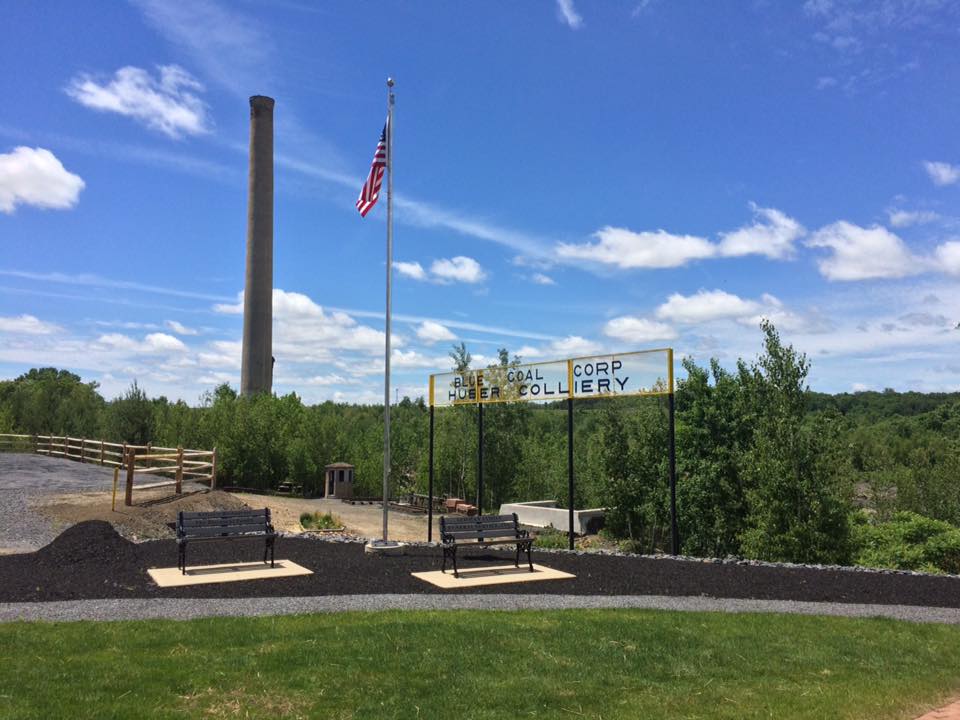
On Friday, January 16, 2004, the Huber Breaker Preservation Society took possession of a three-acre parcel of land facing the Huber Breaker in Ashley, to be used as an overlook area for visitors.  The land was donated by Earth Conservancy, which has its offices on adjoining ground.  Tony Mussari, Chairman of the Board of Directors of the Huber Breaker Preservation Society, signed the deed for the land at a noontime public ceremony held at the Earth Conservancy building.

Mike Dziak, President of Earth Conservancy, presented the deed for signing.  He noted that although the primary mission of Earth Conservancy is the reclamation of mine lands, it is also a concern of the organization to honor the heritage of anthracite mining.  Preserving the Huber Breaker for public access and study will serve that end.

Tony Mussari declared that this acquisition of land for a visitor overlook at the Huber is both a tribute to the past and also a step forward.  A community builds for the future when it respects and maintains the monuments of its origin.  The network of mines and railroads that connected Northeastern Pennsylvania to the industrial centers of the eastern United States comprise a regional monument of great significance and interest.  How Americans in the nineteenth century devised means to fuel the manufacturing and transportation systems demanded by their new technologies and their expanding population is historical drama of the first order.

Energy remains a central challenge of the modern world.  What are the available sources?   How can they be used?  What are the risks?  Visitors to the Huber Breaker can learn how engineers and mine workers confronted this critical cause before oil and natural gas had been tapped, or nuclear fuels even imagined.  It is still coal that fuels half the nation’s electric power stations.  But energy is today gathered from around the world.  Anthracite history shows all the stages here, in one region, from surveying and extracting to marketing and shipping.  Here the names are known of those who played central roles in the enterprise, and their lives, their achievements, their sufferings, their sacrifices.  They shall not be forgotten.

Inside this issue is shown the design for the newly acquired overlook area for visitors to the Huber Breaker.

Robert Janosov Appointed to Pennsylvania Historical and Museum Commission

Robert Janosov, longtime supporter of the effort to preserve the Huber Breaker, has been appointed by Governor Ed Rendell to the Pennsylvania Historical and Museum Commission.  At the monthly meeting of the Huber Breaker Preservation Society on January 20, 2004, Professor Janosov noted that he had just retired from teaching history at Luzerne County Community College.  His Tuesday night classes there had kept him from attending the Tuesday meetings of HBPS, and he was glad to use his first free Tuesday to attend our meeting.  He advised the members that he was ready to help the society draft grant proposals to submit to the state commission, since funds will be needed to fulfill the proposed design.  More than a decade ago, he assisted the federal engineering study group that produced the HAER report on the Huber Breaker, and his article on that giant machine is a leading resource for students.

Knox Disaster Remembered at 45th Anniversary Events

On January 22, 2004, the Greater Pittston Historical Society presented a series of events commemorating the Knox Mine Disaster of January 22, 1959.  An exhibit was opened at the Overlook Professional Center, 200 Overlook Drive, Pittston, coordinated by John Dziak.  This building was formerly the Pittston Hospital, where survivors of the disaster received emergency care.  Fr. Hugh McGroarty presided over a vigil honoring the victims.  Then a slide show presentation was given by Dr. Robert Wolensky, co-author of The Knox Mine Disaster.  Survivors and eyewitnesses of the tragic cave-in, which flooded mines along the Susquehanna, were present and participated in an open discussion.

The following Saturday afternoon, January 24, a memorial event was held at the Anthracite Heritage Museum in McDade Park, Scranton.  Dr. Wolensky showed slides with commentary, and Erika Funke of WVIA showed selections from a documentary on the disaster made in 1984 by the public television station, featuring  newsreel clips, news photos, and filmed interviews with Joe Stella and other survivors.  In addition, Lex Romaine performed songs of his on anthracite mining, “Digging Dusty Diamonds” and a revised ballad on the Knox Disaster, incorporating new findings of Bob and Ken Wolensky and other historians of the subject.  Ballads thus spread the news of mine troubles in the 19th century.

Both these events were attended by overflow crowds.  Mike Stevens of Channel 16 filmed the exhibit at the Overlook Professional Center, to be presented as an “On the Road” feature of the Channel 16 news broadcast.  Double-page coverage by Debby Higgins appeared in the January 21st issue of The Citizens’ Voice.

A mass in remembrance of the victims and survivors of the Knox Disaster was held on Sunday, January 25, at St. Joseph’s Church, Pittston.

Posted in Newsletter | Comments Off

Huber Happenings Volume 2, Number 3 October 2003

THE NEWSLETTER OF THE HUBER BREAKER PRESERVATION SOCIETY

Volume 2, Number 3 October 2003

Ground-breaking Ceremony For Coal Miners Monument Observed at Nanticoke

Under the leadership of Alma Berlot, assisted by her husband, Al Berlot, and many community leaders, a monument to coal miners is to be erected in Nanticoke.  It is a bronze statue of a coal miner, the work of Alan Cottrill of Ohio.  The statue, weighing 700 pounds, is nearing completion and should be shipped here soon.

On October 2, 2003, a ground-breaking ceremony was held at the site for the statue, in front of the CVS parking lot at the northwestern entrance to Nanticoke.  This is the location of the old Nanticoke High School.  The site was donated by the owner of the land, Sam Marranca.

Among those participating in the ceremony were John Toole, Mayor of Nanticoke, Magistrate Donald Whittaker, Gerald Hudak, Vice-President of the Nanticoke Chamber of Commerce, Joseph Keating, mine historian of Plymouth, and John Vengian, promoter of the Coal Miner’s Stamp.  Rev. James McGahagan, pastor of Exaltation of the Holy Cross Church in Buttonwood, gave the benediction.  Monique Chihorek, branch manager of the Nanticoke CVS, helped coordinate the event.

Loretta Chmura is chairperson of a polka dance fund raiser for the monument, to be held November16, 2003, at the Nanticoke American Legion Post 350.   The Anthracite Living History Group, under the leadership of Joe Keating, will mount an anthracite exhibit there that afternoon.

State Funding Authorized for Huber Museum and Park

A bill passed by the Pennsylvania State Senate authorizing funds for the Huber Breaker Anthracite Museum and Park was signed by outgoing Governor Mark Schweiker and now awaits the signature of Governor Ed Rendell, for the release of funds. Governor Rendell has considerable latitude in deciding which projects move forward, reports Leo Kucewicz, Administrative Officer to State Senator Raphael Musto, and the inclusion of the Huber project in the itemized list does not guarantee that funds will be  released for it.

It is Senate Bill 1213, now Act 131 of 2002, the Capital Budget Project Itemization Act of 2001-2002, signed into law by Governor Schweiker on October 30, 2002.  It contains a $9 million project itemization for development and site improvements for the Huber Breaker Anthracite Museum and Park.  Often there are more projects itemized in law than there are available funds.  Senator Raphael Musto, HBPS board member, is working to implement the bill’s provisions for the Huber Breaker through the release of the authorized funds.

Members of the HBPS are encouraged to lobby for this critical release of funds and to bring the Huber cause to the attention of their friends and neighbors in the Anthracite Region.

Visitors and newcomers to Wyoming Valley can easily see the Huber Breaker on the skyline, but they cannot know how central this installation was to the anthracite industry unless informed friends of the breaker enlighten them.  A developed park would meet this need.

HBPS Applies for Grants from Regional Foundations

The Huber Breaker Preservation Society is now applying to the Delaware & Lehigh National Heritage Corridor for a grant of $5000 to support development of the proposed Huber Breaker Anthracite Museum and Park.

A grant for the project in the amount of $3000 has been made to the HBPS by the Eastern Pennsylvania Coalition for Abandoned Mine Reclamation.

These grants enable the Society to press forward with improving access to the Huber Breaker, while building community support for the breaker’s preservation.

Riverside Teacher Fosters Interest in Huber Breaker

Shawn Murphy, a fifth grade teacher at Riverside Elementary West School in Taylor, PA, has been teaching his students anthracite history.

In a letter to HBPS, he writes that his own interest in anthracite mining led him to bring it to the classroom.  One of his former students, Ryan Cavanaugh, age 13, now in eighth grade, accompanied him on a recent visit to the Huber site.  Ryan was thrilled to see a real breaker for the first time.  Teacher and student now belong to the HBPS, since Shawn Murphy has taken out memberships for both himself and Ryan (as a Confirmation present).

Activities Shawn has coordinated at the school include writing letters to Congressman Kanjorski, State Senator Bob Mellow, and former Governor Mark Schweiker, persuading them to help save the Huber Breaker.  He displayed some of these letters in the school lobby, together with samples of coal and photographs of the Huber.

American Labor Events Scheduled for Scranton

Events honoring American labor are scheduled for October 24-25 in Scranton.  At the Scranton Cultural Center on Friday, October 24, there will be a day-long conference, the keynote speakers being Secretary of Labor & Industry, Stephen M. Schmerin, and United Way of Pennsylvania President, Tom Foley.  That evening there will be music by Tom Flannery and a play by Maureen McGuigan.  On Saturday, October 25, at 2:30 p.m., at the Anthracite Heritage Museum, Richard Stnislaus, Museum Curator, will speak on”The Great Strike of 1902.”

Anthracite Veterans Recall Working in the Mines

Among the miners interviewed by Professor Robert Wolensky at the Shickshinny riverside festival in September 2002 were Bill Hastie, Stosh Gurzynski, Art Perry, and John Mikulski.

Stosh worked at the Wanamie Colliery and remembers how good it felt to get a warm shower in the shift shanty after work.  As a laborer, he earned six dollars a day, however long he worked each day.  The breaker was then processing 1100 cars of coal a day.  The Wanamie breaker is gone now, but the shift shanty and fan house are still standing, as well as some other colliery buildings now used by the Regional Equipment Company.  The entrance to the slope mine adjoining the fan house has been filled in, but its location can be determined.  Stosh lives in Sheatown, north of Wanamie, where a coal car is on display near Holy Trinity Church.

Art Perry noted that if you cross the Susquehanna River at Shickshinny heading toward Glen Lyon, you come to Mocanaqua, where a large breaker once stood.  At the Conyngham Township Building, there are mural-size photographs of mine operations at Mocanaqua.

Art recalls how the water that was used to wash the coal at the breaker would be drained off into a lake.  This water was black when it left the washing tub at the breaker, but gradually turned orange, from sulphur brought out of the mine.  Thus the creek that ran from the breaker to the lake was black all the work week, but turned orange on Sunday, when the mine was not operating.

John Mikulski worked as a miner in various mines of the area, from 1935 to 1959, years that saw an upsurge of mining during the Second World War and labor negotiations conducted on the national scene under the UMW leadership of John W. Lewis.       Anthracite coal faced a continuing struggle to compete with oil and natural gas, but in the 1950′s, the Jersey Central Railroad was still carrying carloads of anthracite from the Huber Breaker to New York City.

Posted in Newsletter | Comments Off